

How does biomass briquette machine convert coconut shells into coconut shell briquettes?
How to convert coconut shells into coconut shell briquettes? The production process includes several key stages, and each stage is crucial to the quality of the final product.
The first stage: collecting and sorting coconut shells.
Raw coconut shells were collected from desiccated coconut processing plant, coconut oil plant and coconut milk plant. Impurities such as coconut fiber, soil and stones are removed by vibrating screen and magnetic separator.
The second stage: crushing
The whole or half coconut shells are sent to a hammer crusher or a biomass crusher to reduce the particle size to less than 5 mm This is the key step-the biomass briquetting machine needs uniform raw material granularity to ensure the consistency of briquetting density and quality.
The third stage: drying (if necessary)
If the moisture content of crushed coconut shells exceeds 22%, it needs to be reduced to the optimal range of 12-20% by using a dryer. Proper moisture control is very important for briquette machine to achieve maximum compression force and briquetting integrity.
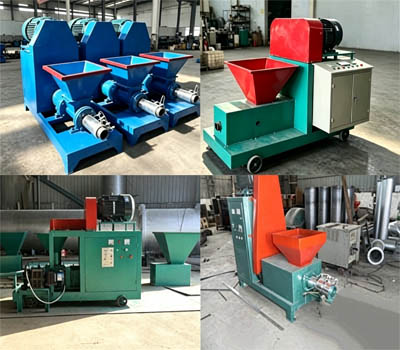
The fourth stage: briquetting
This is the core link of the whole production line. The prepared raw materials are sent to the biomass briquetting machine by a belt conveyor. Inside the machine, the mechanical piston or hydraulic system exerts great pressure-usually 30-150 MPa-to compress the materials into dense briquettes. The heat generated by friction activates lignin, which naturally binds the particles together.
The fifth stage: cooling and packaging
The hot briquettes discharged from the machine are conveyed through the cooling line, and hardened and shaped in the process. After cooling, they can be packaged.
Our company specializes in producing and selling biomass briquette machine and production line equipment. If you want to engage in coconut shell briquettes or other biomass products business, please contact us!