

How to Choose a Wood Briquette Machine: 5 Technical Checks to Avoid Costly Mistakes
Buying a wood briquette machine is not like buying a standard spare part—it is a long-term investment. Many buyers only focus on the price, but later find that the machine cannot form stable briquettes, or the output is far below the advertised capacity.
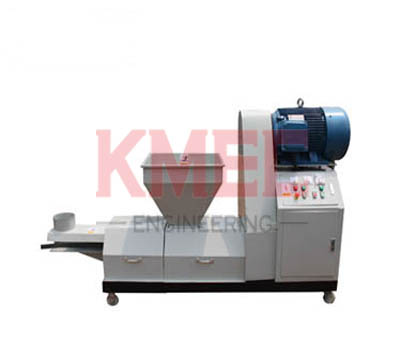
To help you avoid these costly mistakes, here are 5 key technical points you must check with your supplier before placing an order.
1. Raw Material Moisture: The “Make or Break” Factor
This is the reason why briquette machine fails.
•The Requirement: Your raw material (sawdust, wood chips, etc.) must have a moisture content between 8% and 12%.
•Why It Matters: If the moisture is too high, the material will clog the machine and produce soft, crumbly briquettes. If it is too dry, there won’t be enough lignin (natural glue) released to bind the particles together.
•The Right Question to Ask: “If my raw material moisture is 20%, do I need a dryer? Can your machine handle it directly?”
(A honest supplier will recommend a dryer, not just say “yes”.)
2. Screw Propeller & Inner Sleeve: The Heart of the Machine
For screw-type briquette machines, the screw propeller and inner sleeve are the core wearing parts.
•The Problem: Cheap machines use ordinary steel. They wear out in 1–2 weeks, causing the machine to lose pressure and stop forming.
•What You Need: High-temperature resistant alloy steel with surface hardening.
•The Right Question to Ask: “What material do you use for the screw propeller? What is the expected lifespan in hours or tons of output?”
(Look for answers like “high chromium alloy” or specific hour estimates, not vague promises.)
3. Heating System: Crucial for Cold Start & Stability
Briquetting requires high temperature (around 150°C–200°C) to soften the lignin.
•The Check: Ensure the machine has a reliable heating ring (usually 2–4 units) and good temperature control.
•The Right Question to Ask: “How long does the machine take to preheat? Does it maintain a stable temperature during continuous feeding?”
4. Motor Brand & Power: Don’t Get “Standard” Specs
Motor power directly affects output and energy consumption.
•The Red Flag: Suppliers who cannot specify the motor brand or use very low power for large output claims.
•The Calculation: For example, a machine claiming 300–400 kg/h output usually needs at least an 18.5 kW or 22 kW motor. If they offer a 15 kW motor for the same output, be cautious—it may overheat or stall.
•The Right Question to Ask: “Can you provide the motor brand and total installed power (kW) for Model XX?”
5. Density & Calorific Value of Finished Briquettes
The purpose of buying this machine is to create fuel. The quality matters.
•The Standard: Good wood briquettes should have a density of 1.0 – 1.4 g/cm³.
•The Test: Ask the supplier to send you photos or videos of the actual briquettes, or even better, ship you a small sample.
•The Right Question to Ask: “Can you send a sample briquette made from sawdust? What is the calorific value (kcal/kg)?”
Pay for Value, Not Just Price: A wood briquette machine is not just a metal box—it is a combination of thermodynamics, mechanics, and material science. By asking these 5 questions, you filter out amateur suppliers and find a partner who truly understands the technology.
At KMEC, we believe in transparency. We encourage you to ask us these tough questions. We provide free raw material testing and detailed parameter reports to ensure our machine fits your project perfectly. Do you have any plans to engage in the briquette making business? Contact us for detailed quotation and technical data sheet!