

The four steps of biomass briquette making
Biomass briquette making is a processing technology using biomass energy. Agricultural and forestry wastes such as straw, sawdust and rice husk are processed into briquette fuel with high density and high calorific value by biomass briquette machine. This fuel is not only environmentally friendly, but also has a wide range of application values. So, what are the specific steps of biomass briquette making? The following is a detailed introduction for you.
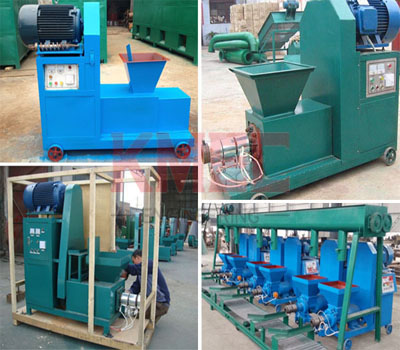
Step 1: Collect and prepare raw materials.
The raw materials of biomass briquette making usually include crop straw, sawdust, rice husk, peanut shell and so on. These raw materials need to be collected and classified first to ensure the purity and quality of raw materials. In order to improve the efficiency briquette making, it is sometimes necessary to carry out simple pretreatment of raw materials, such as crushing and drying, to make them reach the particle size and moisture content suitable for processing.
Step 2: Crushing and drying.
In the process of briquette making, the particle size and moisture content of raw materials are important factors affecting the quality of finished products. Large pieces of raw materials can be crushed into fine particles by professional crushing equipment. Then, the moisture in raw materials is reduced to a reasonable range (usually 10%-15%) by using drying equipment to ensure the smooth progress of subsequent compression molding.
Step 3: High temperature compression molding.
The treated raw materials will be sent to the briquette making machine and extruded at high temperature and high pressure. In this process, the lignin in the raw materials will soften due to high temperature and play the role of adhesive, thus making biomass briquettes have higher density and hardness. This step is the core link of the whole briquette making process, which directly determines the quality of the finished products.
Step 4: Cooling and packaging.
The temperature of the newly formed biomass briquettes is high, so they need to be cooled by cooling equipment to ensure the hardness and stability. The cooled biomass briquettes can be packaged and stored, and can be divided into bulk or bagged forms according to requirements, so as to facilitate transportation and sales.
As a kind of clean energy, biomass briquette making not only has environmental protection value, but also can bring considerable economic benefits. If you have abundant biomass resources and are interested in this field, you may wish to consider investing in biomass briquette making projects. We have professional biomass briquette machine and technical team, which can provide you with all-round support and help you easily start the green energy business!